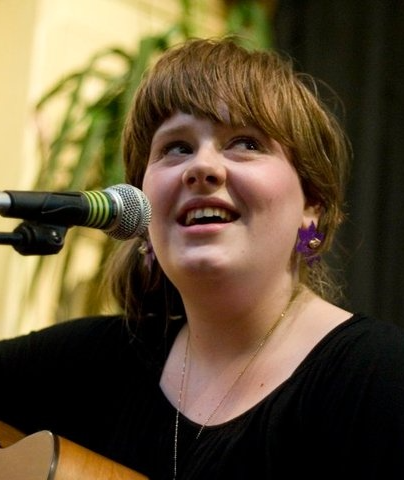
The London of the mid-2000s seems perfectly designed to launch a talent like Adele to stardom. Studying at the prestigious BRIT School for Performing Arts & Technology, a school that had only recently graduated both Amy Winehouse and Katie Melua, Adele lived in an environment where cutting hits and signing record deals was part of the atmosphere.
Long before 19, before the BBC Sound of 2008 poll, before the televised award shows, the stadium tours, the James Bond theme, and the storied Las Vegas residency, a teenaged Adele first appeared on a little-known 12″ issued by the UK electronic producer Ricsta. The record: “Be Divine,” was an obscure early feature by a pair of then-unknown artists. One of them became a superstar.
Around the same time, Adele had an argument with her mother about leaving London to attend university. She had been planning to go to Liverpool, then changed her mind and wanted to stay in London. Her mother, worried that staying close would keep her dependent, pushed her to move away and learn to stand on her own. Adele stormed upstairs, cried, and wrote a song about the place she did not want to leave. She came back down, played it to her mother “as a protest song,” and told her she was staying. Her mother, she later recalled, relented. The song,”Hometown Glory,” was the first song she ever finished, written in roughly ten minutes. The song was later to be nominated for a Grammy.
“Be Divine”
In the prolific and decentralized mid-2000s UK dance scene, producers often pressed short runs of white labels, distributed them to specialist shops, and relied on DJs to spread a track through clubs and pirate radio. This was Ricsta’s world, an industrious London producer whose work circulated through niche dance networks rather than through major labels.
This ecosystem produced “Be Divine,” an electro-house track that tried to find its place in the London dance scene. Adele’s contribution was a series of carefully phrased R&B lines layered across the beat, more atmospheric than declarative. She may have been seventeen when she recorded it, but her rounded, resonant, slightly smoky tone cuts through the production, a clue to the career that would follow. She sounds, even then as a youth doing electro, like Adele.
Pressings of “Be Divine” were limited. Only a small number circulated through London record shops, with no emphasis on promoting Adele specifically. For years, the track remained largely unknown outside the dance-house circles where it first appeared. Years after Adele’s breakthrough, collectors, archivists, and devoted fans started hunting for the Ricsta record, trying to trace the earliest recorded instance of her voice.
“Be Divine” is a strong but typical mid-2000s house record, not a world-beating dance track (though some of the remixes verge on being bangers).
Knowledge as to how the Ricsta/Adele collab came to be is thin, with little evidence beyond the record itself, but that 12-inch brings us to a scene that valued collaboration, immediacy, and experimentation. The Adele of “Be Divine,” like the stories of so many other young musicians, is that of a beginning artist doing provisional, local sessions for friends, classmates, and local producers, developing that distinctive voice that would one day inspire the world.
“Be Divine” is the prelude to the prelude: the first commercially released trace of a generational voice who appeared briefly in a scene that did not yet know what it had.
“Hometown Glory”
In later interviews, Adele has tied the lyric “I like it in the city when two worlds collide / you get the people and the government / everybody taking different sides” to another formative experience: joining the huge anti-Iraq-war march in London as a teenager. Being in that crowd fed directly into the way she wrote about her city as a place of conflict, solidarity, and memory. Between the university argument and the protest march, “Hometown Glory” became an “ode to the place where I’ve always lived,” she said later.
Early in her development as a songwriter Adele had made an informal promise to Jamie T, another London singer-songwriter, that he could put out “Hometown Glory” on his own small label, Pacemaker Recordings. But her career began to move quickly after graduating high school. She signed to XL recordings and planned to add “Hometown Glory” to what would become 19, her groundbreaking first album. “But you promised I could put out ‘Hometown’ back in the day,” Jamie reminded her. Despite her XL contract, that promise was honored.
On 22 October 2007, “Hometown Glory” appeared as Pacemaker PACE004, a limited 7″ single released in the UK. Only 500 copies were made and it was one of very few records Pacemaker pressed that didn’t feature Jamie T. The record paired “Hometown Glory” with “Best for Last,” produced by Jim Abbiss, who was simultaneously becoming a key studio collaborator on 19.
Piano and voice dominate with a simple structure,“just four chords pressing one string,” she later said of writing it on guitar, but the arrangement leans on a pulsing piano pattern and long, sustained vocal lines. The Pacemaker release did not chart. It had no mainstream radio push and no video. It circulated in small quantities through independent shops and word of mouth. It was fairly unnoticed, but her vocal on the Pacemaker 7″ has the signature warm power, emotion and timbre that would earn the XL re-release of this record a Grammy nomination and help make Adele a star. As her career expanded, “Hometown Glory” became a fixture of her live sets—a recurring opening or closing statement, and, in interviews, a song she still referred to as “my baby.”
But all of that – the charts, the award shows, the arena sing-alongs – rests on this first, small record: a 7″ single on Pacemaker cut from a song written in one emotional burst, released because of a kept promise.
by Sean Ransom – Dec. 5, 2025